
Social Media Ideas for Architects

AEC Content Ideas To Boost Your Firm’s Social Media Presence
Our free guide helps architecture practices turn everyday project activity into purposeful social content, without creating unnecessary additional workload.
Access monthly content prompts, key industry events and awards, and six practical formats to help you plan, create and share content with greater confidence.
The Architecture Firm Content Calendar
Your practice has more to say than you think.
Projects, planning decisions, site visits, material choices and client conversations can all inform the creation of valuable social content. This helps showcase your architectural services to existing and future customers.
This architectural marketing guide offers practical ideas and prompts to help identify relevant stories and create content with confidence – particularly during the months when it is less clear what to share. It is intended as a source of inspiration, rather than a prescriptive rulebook.
This is a practical social media marketing resource for architecture practices, featuring monthly content prompts, key industry events and awards, and proven content formats to explore.
Inside the guide:
Month-by-month suggestions to help keep your social media channels moving throughout the year. Use these ideas to support your content marketing across a range of channels and initiatives – from Instagram Stories to LinkedIn groups
A UK and international events list for architecture and construction professionals, each with a useful content angle
An awards list, highlighting some of the key programmes your competitors and other industry professionals will be considering
Six formats worth trying, with real examples to help you build a content plan, boost your social presence and showcase your thought leadership
If you'd rather these were planned, produced and posted for you, there's more on that further down the page.
What Should Architects Post on Social Media?

The strongest social content does more than show finished photographs. It makes the thinking behind a project visible: the brief, the trade-offs, the expertise, the people and the decisions that shaped the outcome.
Choosing the Best Social Media Platforms for Your Practice
You do not need to be active on every social media platform. Choose the platforms where your target audience already spends time – clients, collaborators, other architects or industry professionals – then build a manageable rhythm around material that reflects the work you want to win more of. If you are starting from nothing, it is often easier to master one platform before spreading across several.
For many architecture practices, the best social media platforms are a mix: LinkedIn to demonstrate expertise, build professional networks and reach a broader audience – including through relevant LinkedIn groups – and visual platforms such as Instagram, where Stories work well for quick, in-the-moment site updates alongside the main feed for process, detail, completed spaces and practice character. The right combination depends on your audience, project type and specific niche.
A consistent social media presence, built up over time, helps both existing and future clients see the expertise and judgement behind the work, not just the finished result. The same material works whether you are speaking to past clients, potential clients or new clients you have not met yet.
If social media has felt like a struggle to get right, our blog on why professional firms flounder on social media covers the more common reasons why.
Practical Social Media Ideas for Architecture Firms
Six Content Formats to Use Repeatedly
Generating social media ideas becomes easier with a system of proven formats to return to, rather than starting from a blank page every time. Used consistently across your social media accounts, these six formats help produce engaging content without reinventing the process for every post.
Choose content pillars – the recurring themes your practice wants to be known for – and use these formats to explore them.
1. Explain One Design Decision
Show how a constraint, opportunity or client need shaped the work. This could be a material choice, a planning response, a daylight strategy, an accessibility decision or a decision about reuse rather than replacement.
Example: Why we chose this façade material: durability, local context and long-term maintenance all mattered.
2. Take People Behind the Process
Show the work between the first brief and the finished photographs. Sketches, models, site visits, design reviews and coordination meetings help clients understand the rigour behind the result.
Example: From planning constraint to approved design: three decisions that changed the scheme.
3. Turn Site Progress Into a Story
A live project gives you several opportunities for useful content. Explain what is happening, why it matters and what the stage reveals about design, delivery or performance.
Example: What this point in the build tells us about the retrofit sequence and the project’s thermal performance
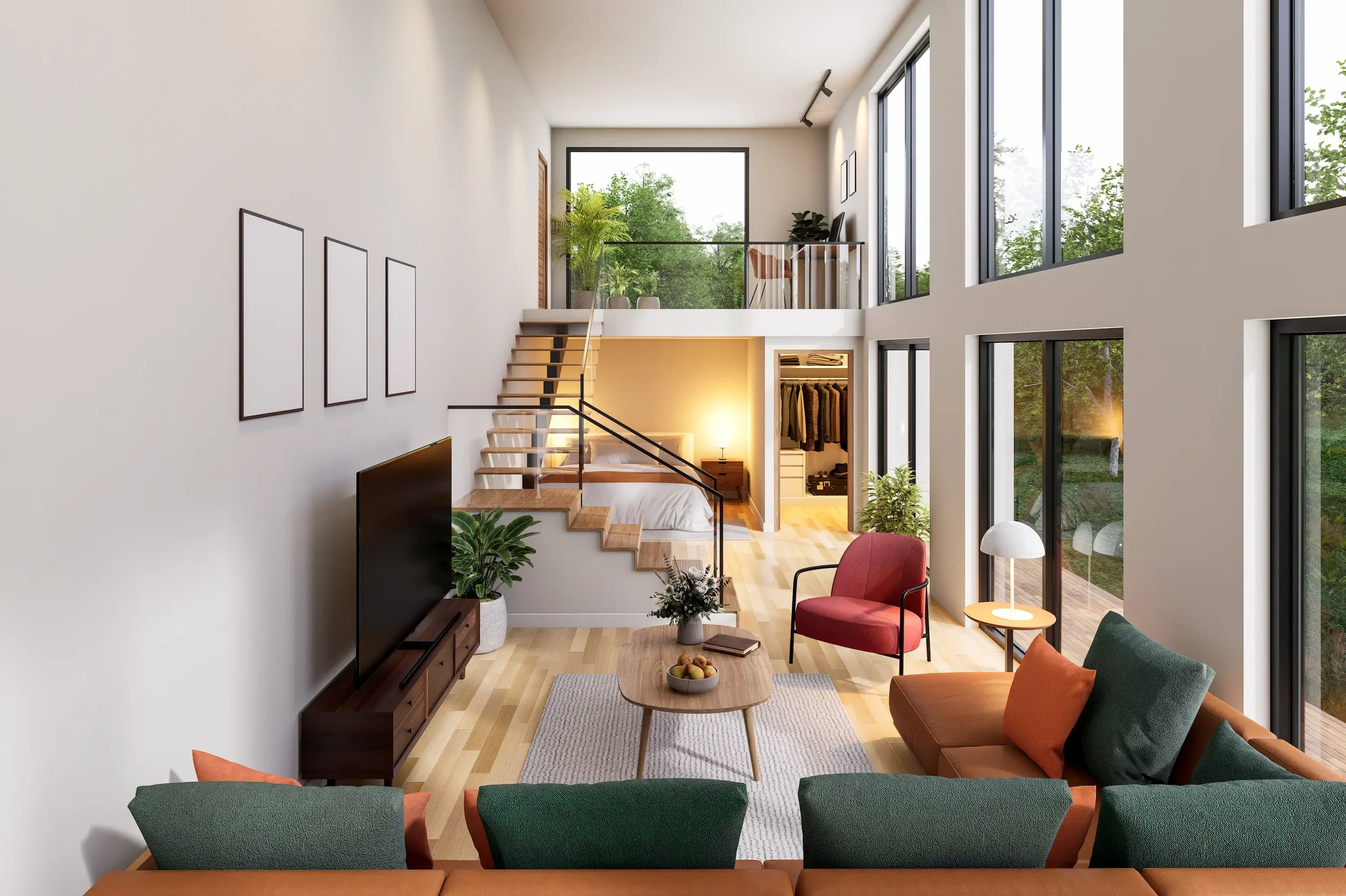
4. Share Technical or Sustainability Expertise
Use content to make specialist knowledge accessible. Explain a building-performance decision, a material, an approach to embodied carbon, water, ventilation, biodiversity or adaptive reuse.
Example: What a lower-carbon specification meant in practice – and where the project required compromise.
5. Make the Brief and User Needs Visible
The best project stories are not only about how a building looks. They show how the work responded to the people using it, the setting around it and the problem it needed to solve.
Example: How the brief shaped our approach to circulation, accessibility and everyday use.
6. Use Awards, Events and Recognition With a Point of View
An event, shortlist or award can create a useful reason to post, but the real content is the insight behind it. Explain what you learned, why the project matters, or what a wider industry conversation means for your work.
Example: What this award shortlist says about the growing importance of retrofit in regional housing.
Together, these formats support social media marketing throughout a project’s life: introduce the brief, explain decisions as work progresses, and show the completed outcome. Combine project stories with educational content and client testimonials, where you have permission, to help potential clients understand your expertise and approach.
These six formats are a useful starting system to run yourself. But turning them into a consistent programme still requires decisions about priorities, projects, images, copy, approvals, scheduling and distribution. If that is more than you want to manage alongside running a practice, book a fit-call to discuss whether Beauxhaus is the right partner.
Social Proof: What a Managed Content Programme Delivers
Different practices need different content systems. A residential architecture studio will not market itself in the same way as a larger multidisciplinary architecture and engineering consultancy working on infrastructure and decarbonisation. But both need a clear way to turn expertise, projects and professional insight into material that reaches the right audience.
RESIDENTIAL ARCHITECTURE PRACTICE
A more purposeful content programme, built around real projects
665%
RISE IN FACEBOOK INTERACTIONS
125%
GROWTH IN ORGANIC SEARCH USERS
Dedicated SEO blogs, project case studies and service pages were promoted through a planned schedule across two social platforms, with improved imagery, more engaging copywriting and a small paid ad budget behind the posts.
STRATEGY AND DESIGN CONSULTANCY
A long-term integrated system across social, SEO and podcasting
16,500+
SOCIAL MEDIA FOLLOWERS
1/3
AMOUNT OF TOTAL SITE TRAFFIC
LinkedIn grew from 500 followers, while the Insights section became a central destination for thought-leadership traffic. The consultancy secured a major UK data centre contract after the client discovered its thinking on LinkedIn.

Your Architecture Firm Social Media Calendar
A Year of Useful Planning Prompts
The calendar below is not a list of dates you are obliged to mark. Use the moments that connect naturally with your work, project pipeline and point of view. Posting regularly, even briefly, helps maintain visibility with prospective clients and existing contacts alike.
A relevant project insight will nearly always be more useful than a generic awareness-day graphic. The practice-led prompts are deliberately included to help you plan around the stories, evidence and images you already have.
January – Share the Story of a Completed Project
Practice-led content prompt
Pick a project that's been finished long enough to be lived in, worked in or visited. Show how it's actually performing now that it's occupied – what's worked well, what surprised you, and how the space or building is being used day to day.
This kind of post carries more weight than one taken at handover, because it shows the outcome, not just the intention.
February – Introduce the People Behind a Project
Practice-led content prompt
Spotlight someone whose expertise shaped a recent project – a team member, an engineer, a contractor or another consultant – and what they specifically brought to the outcome.
This works well because it's easy to write, genuinely interesting to a wider audience, and shows the collaborative reality behind the finished work.
March – World Engineering Day for Sustainable Development
4 March
Architecture rarely happens in isolation. Use this moment to show how architects, engineers, consultants and contractors work together to solve technical, environmental or delivery challenges.
A useful post might explain a structural, energy, services, construction or information-management decision that helped a project work better.
UNESCO World Engineering Day for Sustainable Development
March – International Women’s Day
8 March – optional additional moment
Use International Women’s Day only when your practice has a meaningful story to tell about leadership, mentoring, careers, technical expertise, collaboration or the people shaping a project.
Avoid a generic celebratory post. A clear professional perspective or well-told story will carry more value.
April – World Landscape Architecture Month
Throughout April
For practices working on public realm, landscape, placemaking, biodiversity, water or ecological design, this is an opportunity to make landscape thinking more visible.
Share how planting, drainage, access, ecology, public space or long-term stewardship influenced a project.
World Landscape Architecture Month
April – Earth Day
22 April – optional additional moment
Use Earth Day only where you can make a specific, evidence-led contribution. A real story about reuse, retrofit, materials, embodied carbon, operational energy, water or climate adaptation is stronger than a generic sustainability statement.
May – International Day for Biological Diversity
22 May
This is a useful prompt for practices working with landscape, habitat, biodiversity, water, ecological design or site stewardship. Show how a project responds to the living systems around it – not simply what the completed scheme looks like.
United Nations: International Day for Biological Diversity
June – World Environment Day
5 June
Use this date to explain one real environmental decision in a project. That could be an approach to retrofit, circularity, material selection, operational performance, carbon reduction, water or climate resilience.
Specific evidence is more persuasive than broad environmental claims.
June – Make the Most of Long Summer Days
Practice-led content prompt, optional
June brings the longest daylight hours of the year – useful for capturing better site and completed-project photography, whether that's early morning light on a façade or a longer window for an evening shoot.
Use the opportunity now, and the material becomes useful raw content for posts throughout the rest of the year.
July – Build a Summer Project-Story Series
Practice-led content prompt
Use one live or completed project to create a short sequence of posts. Start with the brief, then explore a constraint, design decision, material or technical choice, site-stage insight and completed outcome.
This approach gives a project more value than one finished photograph and helps an audience understand the depth of your work.
August – Answer a Question You're Often Asked
Practice-led content prompt
Think of a question clients or prospects regularly raise – about process, planning permission, cost, timelines or what to expect from working with an architect – and turn your answer into a clear, standalone post.
It's genuinely useful to the person reading it, and it's one of the easiest formats to return to whenever you're short on time.
September – International Day of Clean Air for Blue Skies
7 September
For architecture and AEC practices, this is a chance to discuss indoor air quality, ventilation, active travel, transport, low-carbon retrofit, healthier neighbourhoods or the relationship between buildings and their wider environment.
United Nations Environment Programme: International Day of Clean Air for Blue Skies
October – World Architecture Day and World Habitat Day
First Monday of October – date varies annually
World Architecture Day and World Habitat Day are strong prompts for a clear, project-led perspective on housing, communities, public value, reuse, adaptation, access or the role of architecture in improving places.
Use the annual theme as a starting point, but anchor the post in a genuine view or project experience from your practice.
November – London Build and elementalLONDON
Annual event – check current dates, venue and programme
London Build and elementalLONDON, incorporating CIBSE Build2Perform Live, bring together built-environment conversations around construction, energy, building performance, retrofit, carbon, materials, delivery and collaboration.
Share a reaction to a product, technology or conversation from the show floor, and how it connects to a live project.
London Build | elementalLONDON
December – Year-End Project and Learning Reflection
Practice-led content prompt
Look back at the year through the work itself. Share a project lesson, a collaboration insight, a practice milestone, a useful shift in approach, or an idea you are taking into the year ahead.
This is also the time to review which content led to useful conversations, stronger engagement or better understanding of your practice’s expertise.

Architecture Industry Events to Plan Around
Events can be useful social-media moments when they connect to your work. Attend, contribute or respond with a point of view – sharing industry insights or a reaction to emerging design trends – but avoid treating an event badge or a photograph from a stand as the whole story.
Dates, venues, programmes and entry arrangements change. Check the organiser’s website before scheduling content, attendance, submissions or travel.
Futurebuild, UK Construction Week London and Stone & Surfaces Show
Annual – check current dates, venue and format
A major built-environment event covering sustainable construction, materials, innovation, technology, regulation and delivery. Futurebuild and UK Construction Week London were co-located in 2026; from 2027, Stone & Surfaces Show joins as a third co-located event, with the combined edition moving to May.
Useful content angle: connect an industry conversation to a material choice, project challenge, performance issue or delivery insight from your own work.
Clerkenwell Design Week
Annual – typically May
A leading UK design event with particular relevance to architecture, interiors, workplace, materials, product design and specification.
Useful content angle: share a considered view on a material, product, craft, showroom visit or specification trend through the lens of a current project.
Digital Construction Week
Annual – typically June
A useful event for practices interested in BIM, data, artificial intelligence, digital delivery, interoperability and construction technology.
Useful content angle: explain how digital process, information management, automation or collaboration improves decision-making in a real project.
London Festival of Architecture
Annual – typically June
A particularly strong architecture-specific opportunity for practices that want to contribute to public discussion about London, design, neighbourhoods, urban change and the built environment.
Useful content angle: share a local viewpoint, project tour, event contribution or response to the festival’s annual theme.
London Festival of Architecture
Homebuilding and Renovating Show
Multiple regional editions annually
Particularly useful for residential, self-build and retrofit practices. The show provides a natural opportunity to answer common client questions and demonstrate expertise in extensions, renovation, energy upgrades, planning or homeowner decision-making.
Useful content angle: create a short, practical response to a common question from homeowners or self-builders.
Homebuilding and Renovating Show
Open House Festival
Annual – typically September
A major public architecture festival organised by Open City. It offers a strong opportunity to open a building, run a tour, explain design decisions, credit collaborators or reflect on how people experience a place.
Useful content angle: share the story behind a building or neighbourhood, including the questions visitors ask and what they reveal about the project.
London Design Festival
Annual – typically September
A major design event with relevance to architecture, materials, interiors, craft, culture, retail and public realm.
Useful content angle: use a project to discuss a design, material, craft or place-making question raised by the festival.
UK Construction Week Birmingham
Annual – typically autumn
A major national construction event, distinct from the London/Futurebuild format. It can be useful for practices with an interest in delivery, materials, partnerships, sustainability, technology or wider sector change.
Useful content angle: publish a practical perspective on an industry shift that affects the way projects are designed or delivered.
London Build and elementalLONDON
Annual – typically November
A combined late-year built-environment opportunity. London Build has a broad construction and delivery focus, while elementalLONDON incorporates CIBSE Build2Perform Live and focuses on building performance, energy, decarbonisation, sustainable building services and retrofit.
Useful content angle: explain an energy, carbon, material, procurement, retrofit or design-engineering issue using a real project example.
London Build | elementalLONDON
World Architecture Festival
International event – typically November; dates and location vary
World Architecture Festival is a major international architecture and awards event, combining live project presentations, judging, talks and exhibitions across architecture, landscape and interiors.
It is particularly relevant to practices with internationally visible work, award entries, global clients or a strong interest in wider architectural debate. It is not an expectation for every UK practice, but it is a valuable international reference point.
Useful content angle: share a considered view on a shortlisted project, a wider theme emerging from the festival, or a lesson from presenting work to an international audience.
2026 reference: 18–20 November, Broward County Convention Center, Fort Lauderdale, Florida.

Architecture Awards Worth Tracking
Awards can create a useful content opportunity at several points: when an entry opens, when a project is shortlisted, when a winner is announced and when you have time to explain the work properly afterwards.
The most effective award content explains why the project matters. It credits clients, consultants, contractors and collaborators, and makes the underlying design, technical or social-value story visible.
RIBA Awards and Prizes
RIBA runs a range of UK and international awards programmes. Check the specific award page for eligibility, entry dates, shortlist announcements and winner dates.
Architects’ Journal Awards Programmes
Architects’ Journal runs several distinct awards programmes. Treat each programme separately, as categories and dates differ.
Dezeen Awards
A useful international option for design-led architecture, interiors and product work.
Architizer A+Awards
An international programme for architecture and design projects with a strong visual and public-facing story.
New London Awards
A relevant option for London-based or London-focused projects.

Two Ways We Can Help From Here
A calendar can give you useful prompts, but it can't decide what your practice should be known for, keep the dates current as they change year to year, or turn an idea into a finished post – with photography planned, a rhythm you can actually sustain, performance tracking, and paid promotion behind the posts that deserve it.
If these ideas are useful, but you'd rather they were planned, produced and posted for you, that's social media strategy and management – a focused way we work with architecture practices day to day.
If the gap runs wider than social media – your website, content, SEO, or how it all connects – a broader digital marketing initiative across multiple channels might be the strongest starting point, depending on your business goals.
Either way, the aim is the same: turning the expertise already in your practice into visibility that matches the quality of the work. A 15-minute fit-call is the fastest way to find out which path makes sense.